

MandoMC · · Amanda McRoberts
A Task Is Not an Appointment
Time-blocking is supposed to help organize the day. For me, it creates pressure: what if I stay focused on one thing and fall behind on everything else? I’ve been keeping actual start times on my calendar and the rest on my to-do list.
Time blocking gives me so much anxiety. It’s not even funny.
I know why people like it. A day divided into clean, labeled blocks has a particular kind of appeal. Every task has a place. Nothing is floating around in your head. On paper, it looks like the opposite of chaos.
But when I try to picture my own day that way, I do not feel organized. I feel trapped.
I know deadlines matter. I work in e-commerce, where timing can make a real difference. And as a homeschooling parent, I’m teaching my kids how to manage projects with deadlines of their own.
But a deadline and a start time are not the same thing. Knowing something needs to be finished by Friday doesn’t mean every step leading up to Friday needs an appointment on my calendar. I can respect the deadline without pretending I know exactly how long each piece of work will take.
The problem is the pressure that shows up the minute every task has been assigned a precise hour. What happens if I get hyperfocused on one thing? What happens if it takes longer than I expected? Suddenly, I am not just working on the thing in front of me. I am mentally behind on every block that came after it.
I can’t handle that mentally.

The Productivity Advice That Does Not Fit
I keep running into time-blocking advice—especially from productivity people online—presented as if it is the obvious answer. Put your tasks on the calendar. Give every part of the day a home. Follow the plan.
That may genuinely help someone else. I am not trying to argue that no one should time-block. But a planning method is not automatically a good fit just because it is popular, tidy, or persuasive in a video.
For me, assigning a time to a task can turn a flexible responsibility into an appointment I am already failing to keep.
There is a difference between “I need to order groceries today” and “At 2:00 p.m., I will order groceries.” The first one names something that needs doing. The second one creates a promise to a particular version of the day. If the day goes differently—and days do—now it feels like I have broken the plan before I have even finished the task.
A Calendar and a To-Do List Do Different Jobs
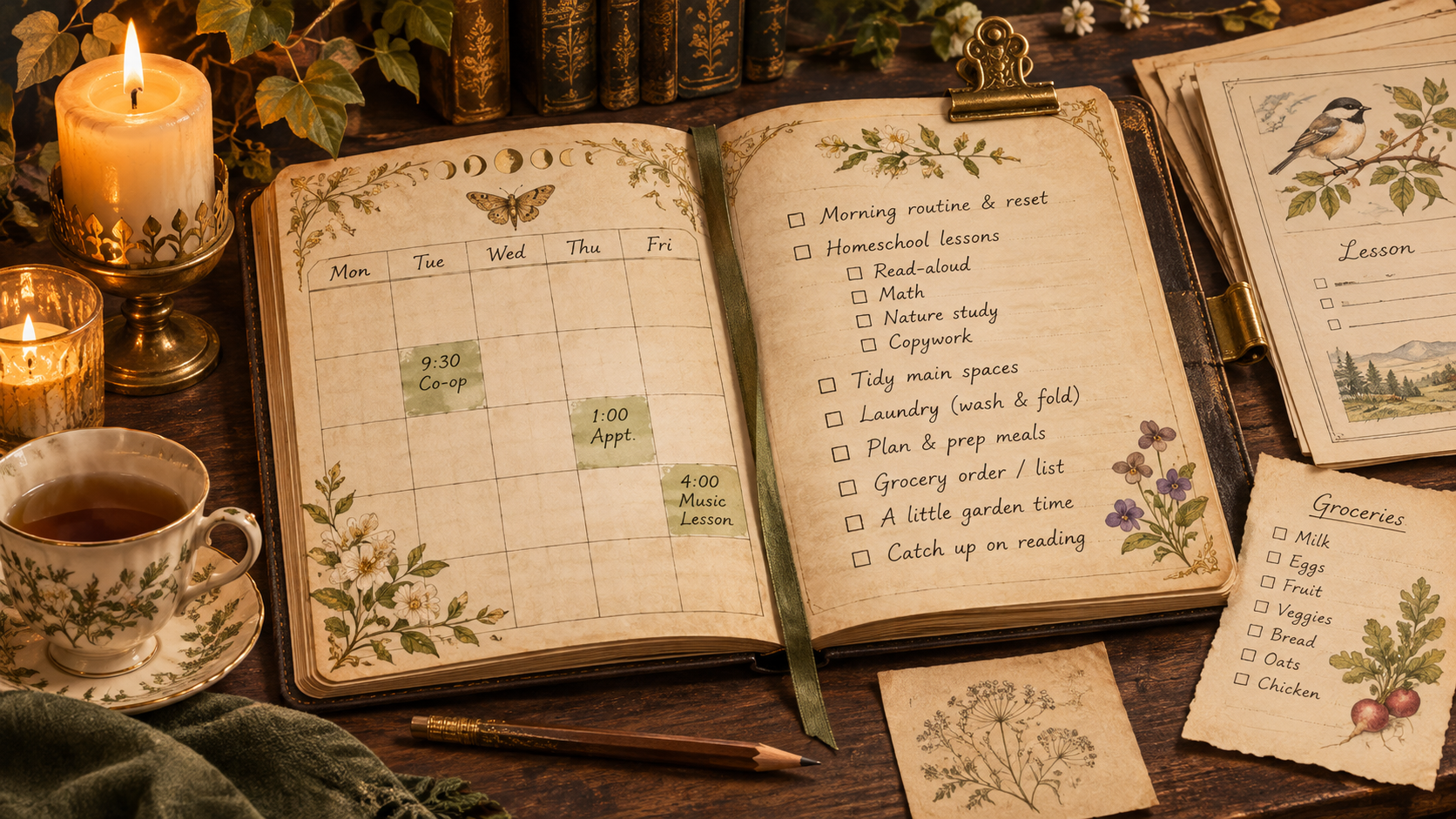
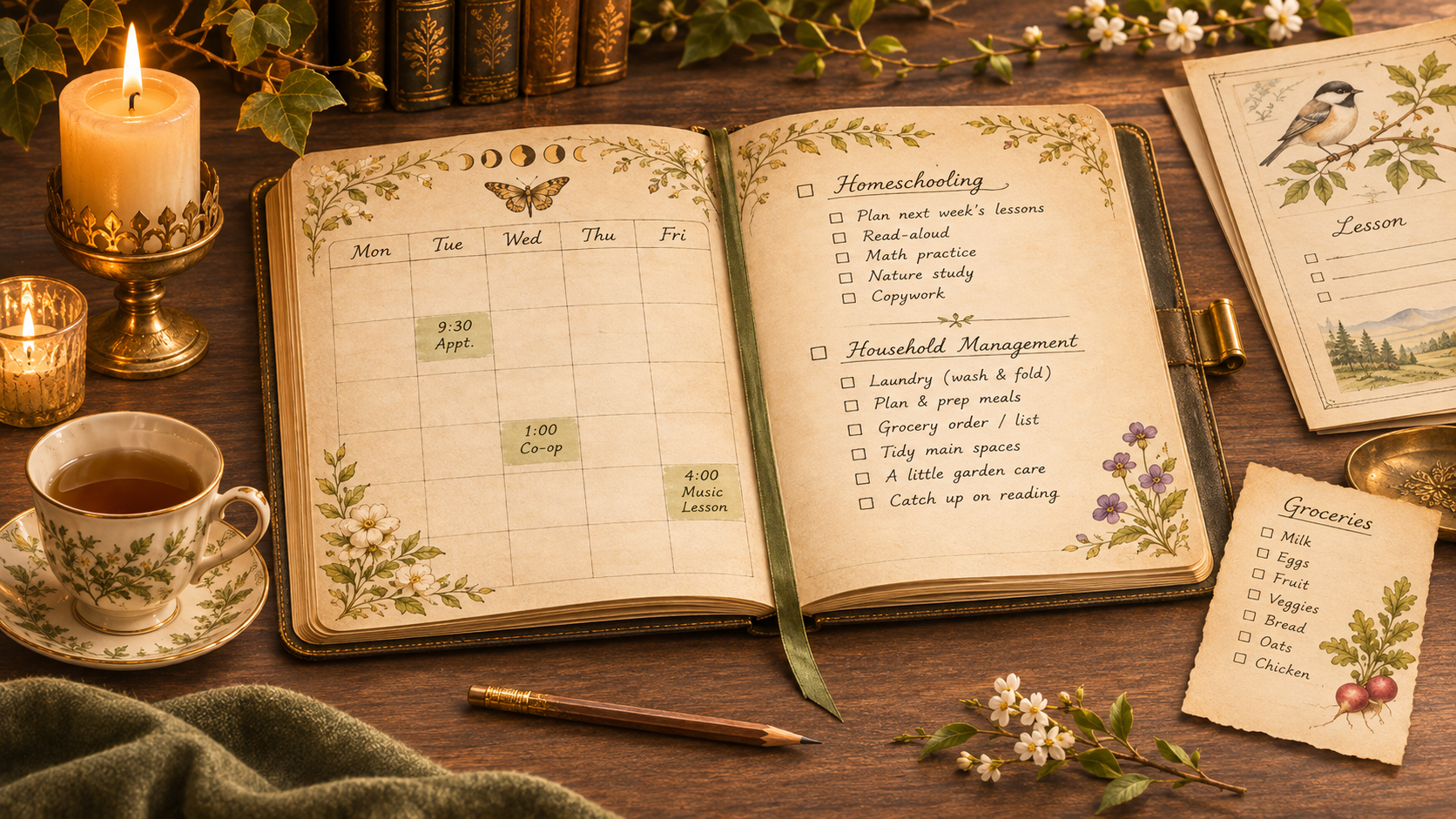
I came across a TikTok that explained something I’d already been doing. I can’t find the video now, but the distinction stuck with me: things with an actual start time belong on the calendar. Everything else belongs on the to-do list.
That was a small sentence with a surprisingly large effect on me, because it validated what I was already doing.
My calendar is for things that happen at a real time. An appointment. A meeting. A confirmed pickup. If I have booked a grocery pickup for a particular time and place, that belongs on the calendar because the time is part of the commitment.
“Order groceries,” on the other hand, is a task. It goes on my to-do list every Saturday because that’s generally when I handle our weekly household admin work.
There’s still a rhythm to it. I know what needs attention and roughly when I intend to handle it. I just haven’t promised myself that groceries will be ordered at exactly 2:00 p.m.
Once I actually book a pickup, that’s different. Now there’s a real time attached to it, and that belongs on the calendar.
A deadline can be real without becoming an invented start time. A task can be important without being assigned to a 30-minute square on Tuesday afternoon. Those are not loopholes. They are different kinds of information.
The Relief of Naming What Was Already Working
I did not hear that video and suddenly discover a brand-new productivity system. I heard someone explain the logic behind an approach I had already been using, and I felt justified.
That matters.
Sometimes the most useful thing is not another method to adopt. Sometimes it is realizing that the thing you have been doing has a reason behind it—and that you do not have to keep forcing yourself into a structure that creates more pressure than support.
That leaves room for a day to change without making every change look like a failure. I can still see my commitments and the work waiting for me. I just don’t need both to live in identical calendar blocks.
That gives me a way to see what is real without creating a running visual reminder of all the ways I might fall behind.
This Is Not a Rule for Everyone
I am not saying a calendar should never hold a task. Some people may find that a time block gives them focus, momentum, or a useful boundary. Some kinds of work really do need protected time.
But “this helps other people” is not the same as “this has to help me.”
When a method adds anxiety, it is worth asking what part of it is doing the work and what part is only adding pressure. Maybe the goal is not to schedule every task more carefully. Maybe the goal is to know what truly has a time attached to it, what can remain flexible, and how to keep both visible without turning the whole day into a test you can fail.
When you’re working, homeschooling, and managing a household, the day rarely unfolds in neat, uninterrupted squares. Lessons run long because a question gets interesting. Work takes concentration. Groceries, laundry, and the rest of life still need attention. That doesn’t make those responsibilities less real, but it does mean I need a system with room to move.
I keep actual start-time commitments on the calendar and the rest where I can see it without assigning every task an hour.
It’s not a perfect system, and I’m not claiming it will fit everyone. It simply helps me be accountable for what matters without treating flexibility as a failure.
And for now, that is enough.
If your calendar keeps turning into a to-do list with timestamps, I made The Bridge to help you build a system that fits how you actually think.